Guide
Your first home away from home: rent, deposits, bills and sharing
4 min read · Beginner

Food is one of the biggest costs you can control. Learn how to plan meals, shop with a list, cook in batches and waste less, so you eat well and spend less.
When you first live away from home, food can quietly become one of your biggest costs. Snacks between classes, late-night takeaways and half-used ingredients add up fast. The good news is that food is also one of the costs you control most. A little planning helps you eat better and keep more of your money.
The habit that makes the biggest difference is simple: plan first, then shop, then cook.
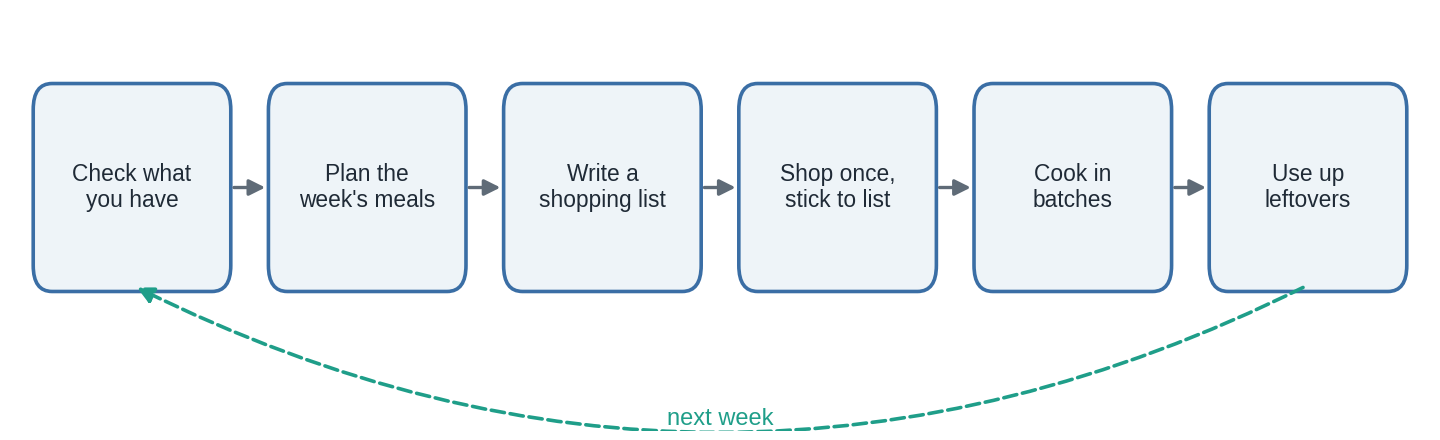
Before you plan, look in your cupboard, fridge and freezer. Build some meals around what needs using up first. This one habit cuts waste more than any other.
You do not need a complicated plan. Decide roughly what you will eat for main meals across the week. Some tips:
Halal meat can be one of the more expensive items in a shop. Ways to manage the cost:
Cooking one large pot of food takes little more time than cooking one portion. Cook two or three larger meals a week and keep portions in the fridge or freezer. Follow food safety guidance: cool cooked food quickly, keep it chilled, and reheat it until piping hot.
Cooking with housemates helps too. Taking turns to cook for the group means everyone eats well for less effort and less money.
Planning often moves money from takeaways to groceries, rather than cutting food spending to nothing. Here is how that might look over one imaginary month.
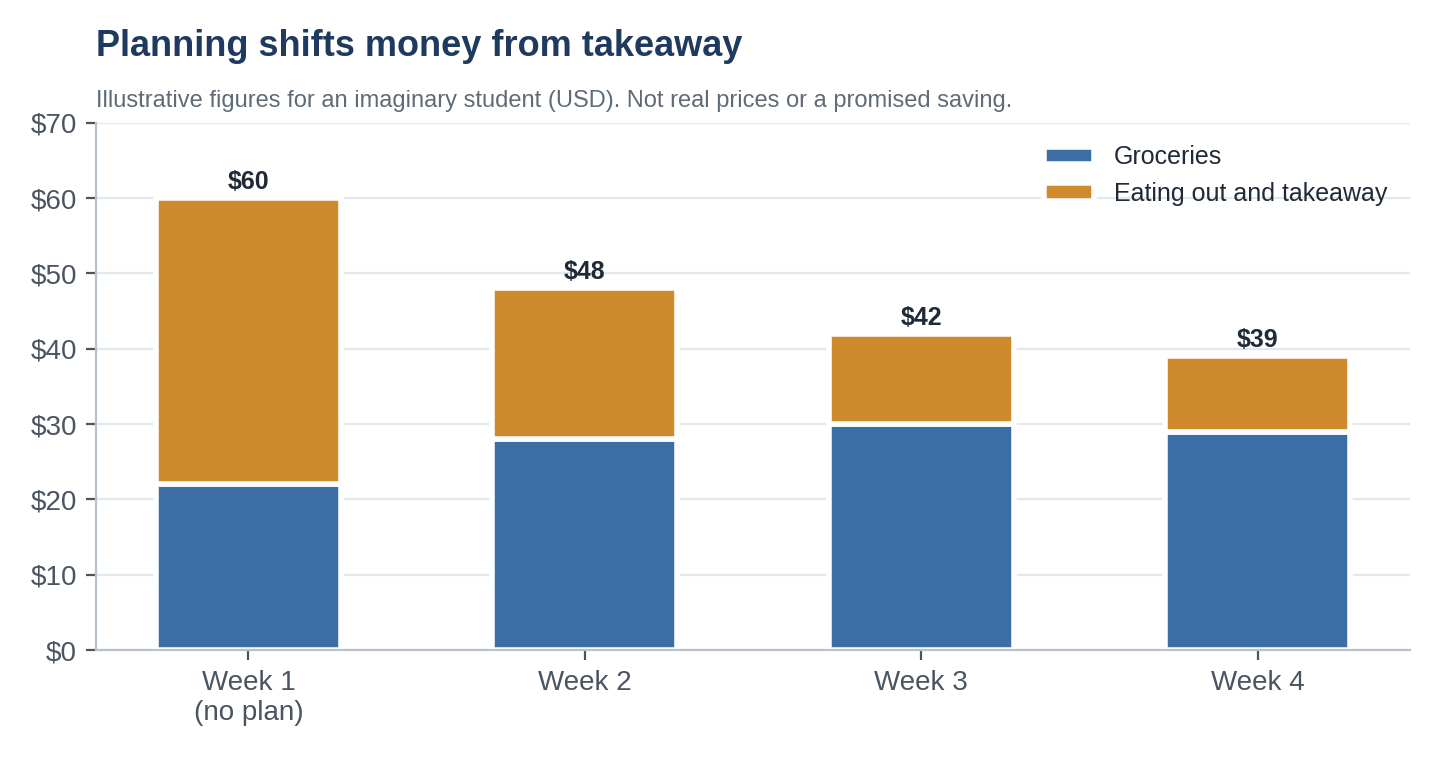
In this example, grocery spending rises a little, while eating out falls sharply. Total food spending drops from $60 in the first week to $39 in the fourth.
It happens, especially while waiting for a payment. Some universities, student unions, mosques and community organisations offer food support or emergency help. Ask your university's student support team what is available. Asking early is sensible, not shameful.
| Day | Breakfast | Lunch | Dinner |
|---|---|---|---|
| Example: Monday | Oats and fruit | Leftover rice and maraq | Lentil stew (cook double) |
| Monday | |||
| Tuesday | |||
| Wednesday | |||
| Thursday | |||
| Friday | |||
| Saturday | |||
| Sunday |
Shopping list: write each item once, grouped by where you buy it (market, butcher, supermarket).
This weekend, fill in the meal plan for next week and write your shopping list from it. Keep your receipts, and compare your food spending with a normal week.
This article gives general guidance and contains no time-sensitive facts, rules or prices, so no external sources are cited. All numbers are illustrative.