Guide
Saving for a goal: laptop, tests, applications and travel
3 min read · Beginner

An emergency fund turns a crisis into an inconvenience. Learn why it matters, how much to aim for, where to keep it and how to start with whatever you can afford.
A broken phone. A medical bill. A stipend that arrives late. An urgent trip home. Unexpected costs happen to everyone. Without money set aside, one problem can quickly become several: missed rent, borrowing at a high cost, or stress that affects your studies.
An emergency fund is money you keep aside only for genuine, unexpected needs. It does not have to be large to make a difference.
A useful test: is it unexpected, necessary and urgent?
One widely used rule of thumb, from the UK's government-backed MoneyHelper service, is to keep three to six months of essential outgoings (your needs) in savings you can reach quickly. MoneyHelper also stresses that any amount you save helps.
For many students, three months of essentials is a long-term goal, not a starting point. So build it in stages:
Reaching the first milestone matters most. It covers many common emergencies and builds the habit.
Your emergency fund should be:
This could be a separate savings account, a second mobile money wallet, or a separate account with your bank. If you prefer to avoid interest for religious reasons, ask your bank whether it offers a Sharia-compliant savings option. Our guide to Islamic finance basics looks at this in more detail.
The fund is there to be used. Using it for a real emergency means it worked. Afterwards, go back to your regular amount, or increase it for a few months, until the fund is back to where it was.
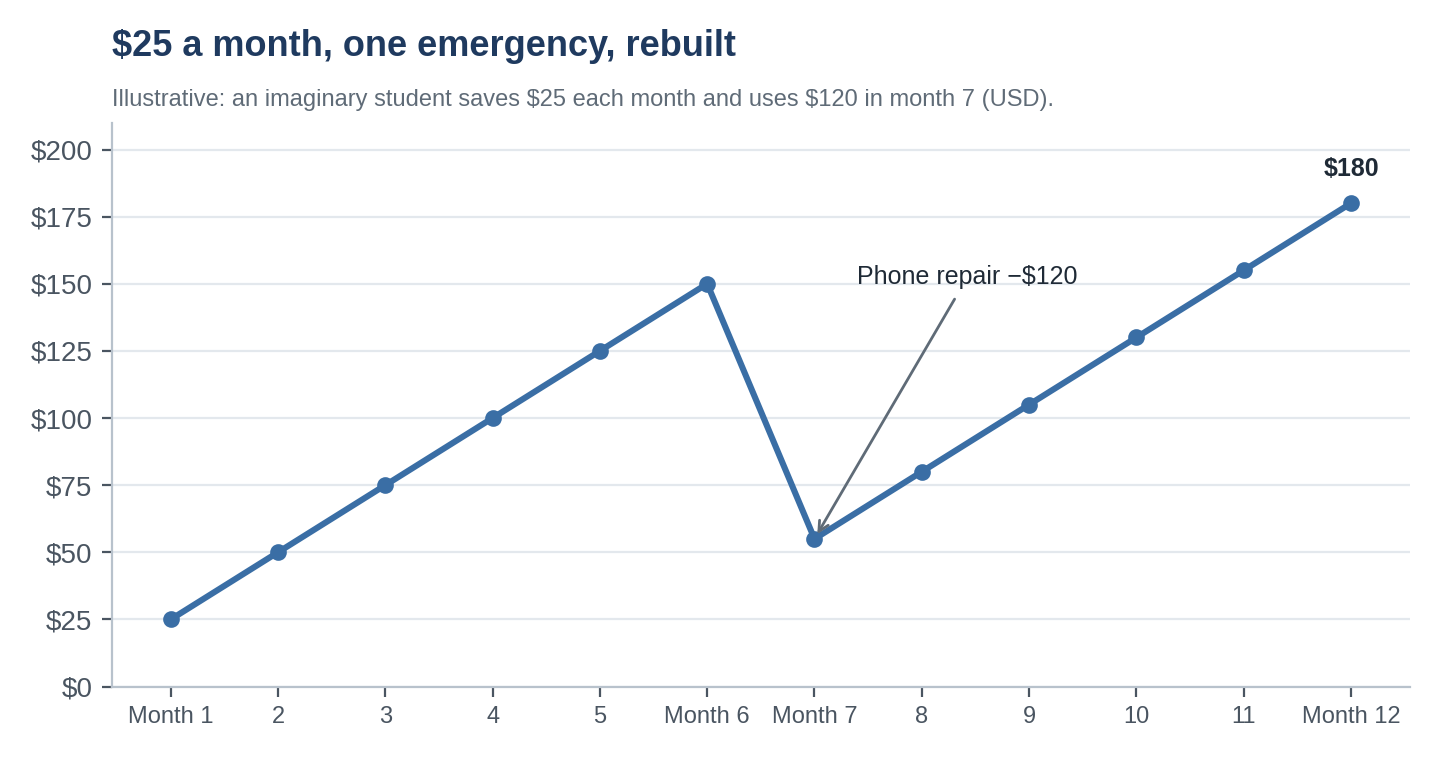
In this imaginary example, saving $25 a month builds $150 by month six. A $120 phone repair in month seven is paid without borrowing, and by the end of the year the fund has recovered to $180.
Many readers are also the person relatives call on in an emergency. It can help to decide in advance how much of your fund, if any, you can use for family emergencies, and to keep that separate from what you need yourself. Our guide to supporting family while you study looks at this in more detail.
Add up one week of your essential costs. That is your first milestone. Choose where your fund will live, and make your first deposit this week, however small.
All other figures are illustrative.
| Source | Used for | Checked |
|---|---|---|
| MoneyHelper: how much to save for an emergency | Rule of thumb: three to six months' essential outgoings, in instant-access savings; any amount helps | 29 September 2026 |