GuideBeginner4 min read

Eating well on a student budget: meal planning and food shopping

Food is one of the biggest costs you can control. Learn how to plan meals, shop with a list, cook in batches and waste less, so you eat well and spend less.

When you first live away from home, food can quietly become one of your biggest costs. Snacks between classes, late-night takeaways and half-used ingredients add up fast. The good news is that food is also one of the costs you control most. A little planning helps you eat better and keep more of your money.

The weekly food cycle

The habit that makes the biggest difference is simple: plan first, then shop, then cook.
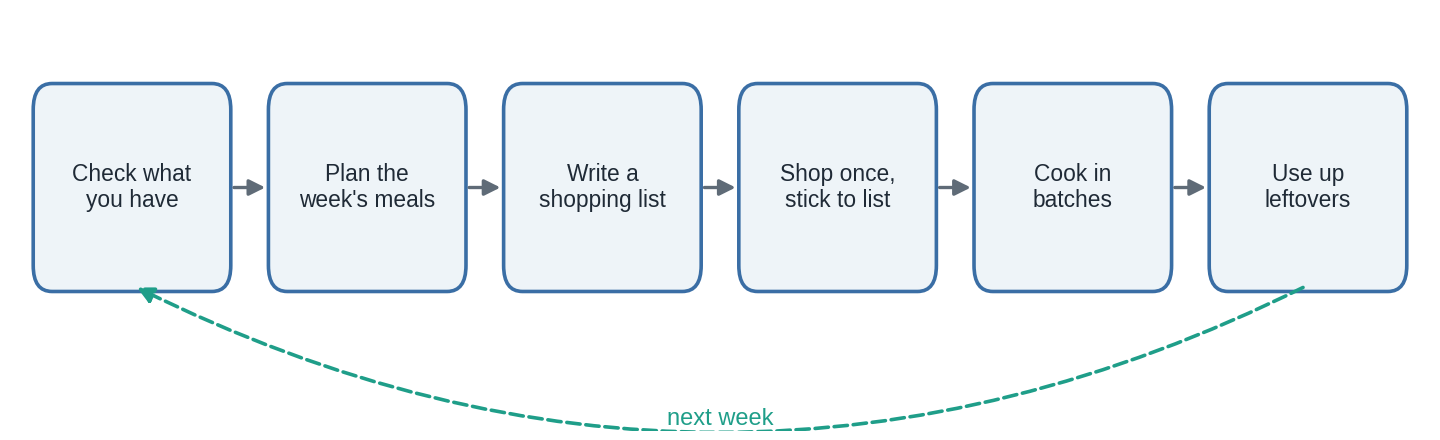
Weekly meal-planning cycle: check what you have, plan the week's meals, write a shopping list, shop once and stick to the list, cook in batches, use up leftovers, then repeat next week.

Step 1: Check what you already have

Before you plan, look in your cupboard, fridge and freezer. Build some meals around what needs using up first. This one habit cuts waste more than any other.

Step 2: Plan the week's meals

You do not need a complicated plan. Decide roughly what you will eat for main meals across the week. Some tips:

  • Plan around a few staples. Rice, pasta, flour, oats, lentils, beans, eggs, onions, tomatoes and frozen vegetables are flexible and often good value.
  • Cook dishes you know. Many familiar Somali meals, such as rice dishes, maraq (stew) and lentil or bean dishes, cook well in large batches. Homemade canjeero or laxoox uses simple, low-cost ingredients.
  • Plan one meal to use leftovers, such as rice and stew that becomes the next day's lunch.
  • Leave room for one easy night, so a busy day doesn't turn into a takeaway.

Step 3: Shop with a list

  • Write the list from your plan, and buy what is on it.
  • Don't shop hungry. It is easier to stick to the list when you have eaten.
  • Compare the price per kilo or per litre, not just the price on the packet. Many shops show this on the shelf label.
  • Try shop-brand products for basics such as rice, flour and tinned tomatoes.
  • Check markets, where fruit and vegetables can be cheaper, especially later in the day.
  • Buy large packs only if you will use them, or share them with housemates or friends.

Halal food on a budget

Halal meat can be one of the more expensive items in a shop. Ways to manage the cost:

  • Compare halal butchers and supermarkets near you.
  • Buy larger packs, divide them into portions and freeze what you will not use soon.
  • Stretch meat further in stews and rice dishes with lentils, beans, chickpeas and vegetables.
  • Plan some meals around eggs, beans or lentils instead of meat.

Step 4: Cook in batches

Cooking one large pot of food takes little more time than cooking one portion. Cook two or three larger meals a week and keep portions in the fridge or freezer. Follow food safety guidance: cool cooked food quickly, keep it chilled, and reheat it until piping hot.

Cooking with housemates helps too. Taking turns to cook for the group means everyone eats well for less effort and less money.

Step 5: Waste less

  • Put newer food at the back and older food at the front.
  • Freeze bread and cooked rice or stew you won't eat within a day or two.
  • Turn leftover vegetables into soup or maraq.

What planning can change

Planning often moves money from takeaways to groceries, rather than cutting food spending to nothing. Here is how that might look over one imaginary month.
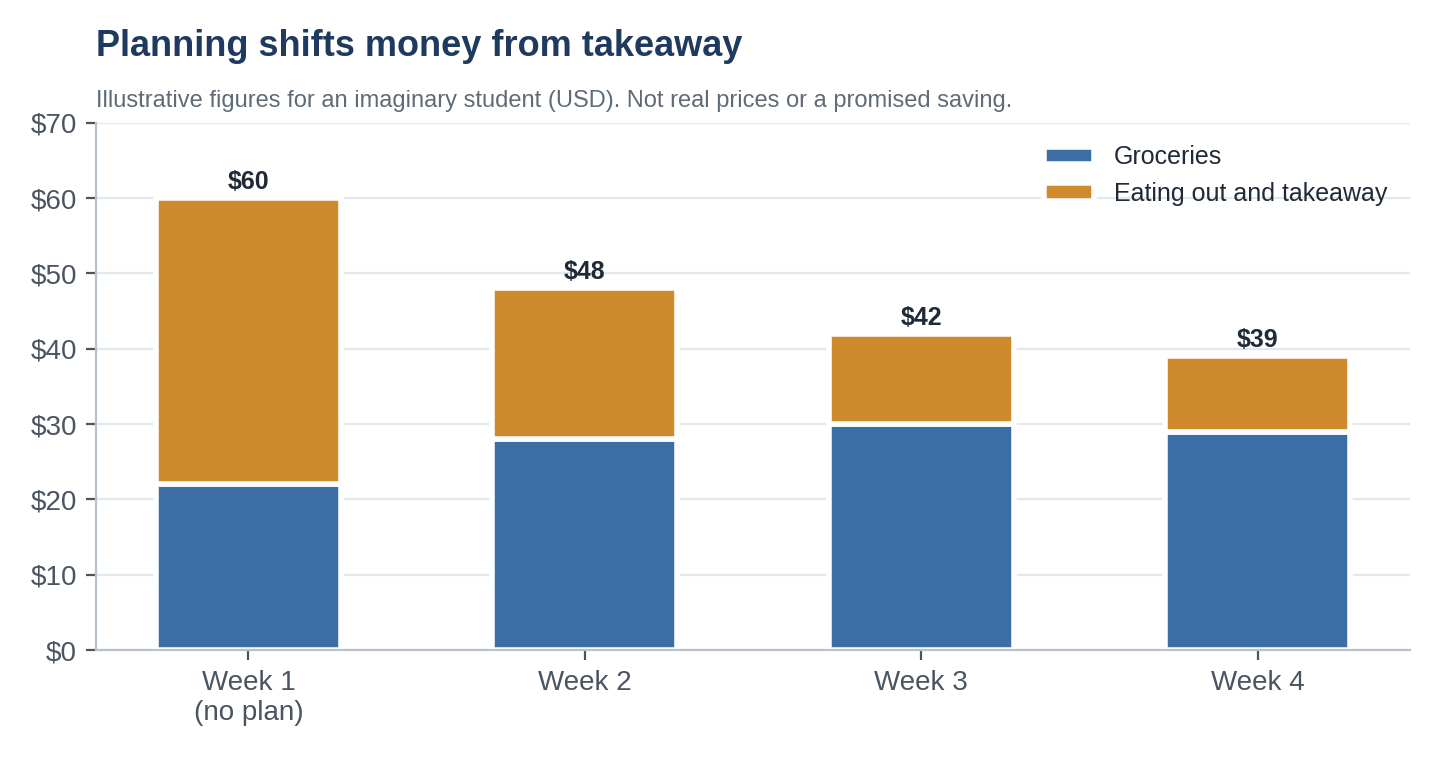
Stacked bar chart of weekly food spending for an imaginary student: $60 in week 1 with no plan, then $48, $42 and $39 as planning reduces eating out and takeaway spending. Illustrative figures.
Illustrative example: imaginary student, USD.

In this example, grocery spending rises a little, while eating out falls sharply. Total food spending drops from $60 in the first week to $39 in the fourth.

If money for food runs out

It happens, especially while waiting for a payment. Some universities, student unions, mosques and community organisations offer food support or emergency help. Ask your university's student support team what is available. Asking early is sensible, not shameful.

Template: weekly meal plan and shopping list

DayBreakfastLunchDinner
Example: MondayOats and fruitLeftover rice and maraqLentil stew (cook double)
Monday
Tuesday
Wednesday
Thursday
Friday
Saturday
Sunday

Shopping list: write each item once, grouped by where you buy it (market, butcher, supermarket).

Checklist: before you shop

  • I checked what I already have.
  • I planned main meals for the week, including one leftover meal.
  • My list comes from my plan.
  • I know my food budget for the week.
  • I have eaten before going shopping.
Your next step

This weekend, fill in the meal plan for next week and write your shopping list from it. Keep your receipts, and compare your food spending with a normal week.

Sources

This article gives general guidance and contains no time-sensitive facts, rules or prices, so no external sources are cited. All numbers are illustrative.

General information only. This guide is written to help you plan and learn. It is not personal financial, legal or tax advice, and Fursad Connect does not recommend specific financial products. Check details with your bank, university or a qualified adviser before you make decisions.

More money guides

Scroll to Top